
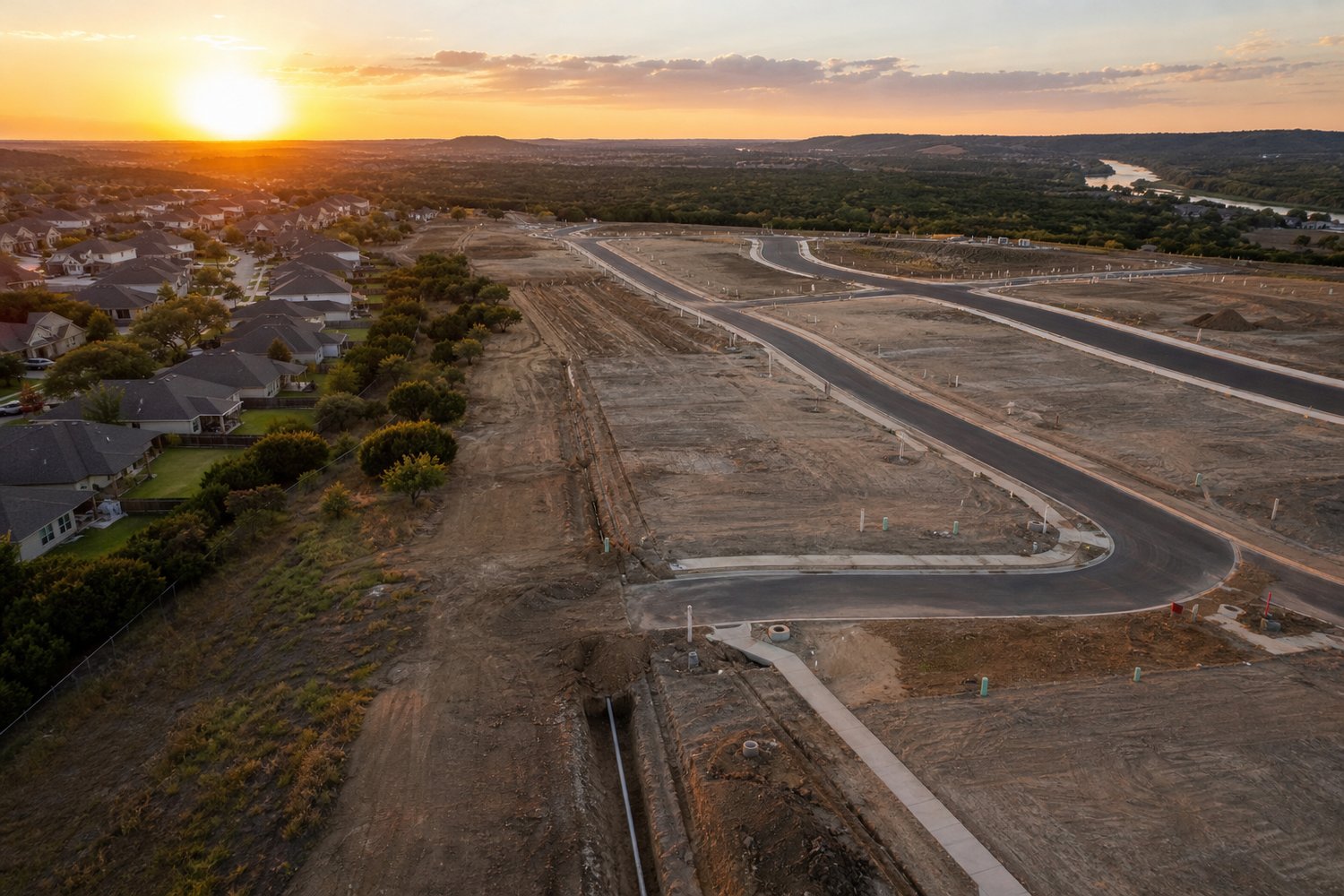
Price your home against the finished, move-in-ready version of the nearest new build, not the builder’s advertised base price. Then decide which visible fixes and which buyer incentives close the remaining gap. Both choices depend on what builders are offering in your specific community on the day you list.
How can a Round Rock or Georgetown resale seller compete with new construction?
A resale seller in Round Rock or Georgetown competes by pricing against the finished specification of the nearest new build, then closing the gap with visible condition fixes and, where it makes sense, a buyer incentive. Buyers shopping new construction can line up price, condition, and included features side by side, so your home has to hold up in that same comparison. What a resale home offers that a builder cannot (mature landscaping, finished fencing, a faster move-in) belongs in the pricing conversation too.
Key Takeaways
- Builder reported that the median new-home closing price in Killeen was $294,000 in April 2026, compared with a $266,000 median for existing homes, which shows how a new-build price premium can shape buyer expectations in a neighboring market.
- The Killeen–Temple market had 2,448 active listings in October 2026 with a $275,000 median list price, down from $279,000 in September, so buyers have real choices and resale sellers can’t price on hope.
- A builder’s base price is not the price a buyer compares you to; the finished price with lot premium, options, fencing, and appliances is.
- Visible, buyer-facing condition (paint, flooring, lighting, landscaping, inspection-visible defects) is the most defensible place to spend money against a new build.
- Whether to cut price, offer a closing-cost contribution, or fund a rate-related concession depends on the buyer’s loan, the appraisal, and the contract terms, so it has to be decided deal by deal.
What do the local numbers say about new construction versus resale?
The most recent figures we have show new homes selling at a premium to existing homes in Central Texas, and buyers with plenty of listings to choose from. Georgetown and Round Rock sit in the Austin corridor and have their own numbers, so the data below comes from the Killeen–Temple side of our market. Treat it as context for how new and resale compete here, not as a Georgetown or Round Rock price guide.
| Measure | Figure | Area and date |
|---|---|---|
| Active listings | 2,448 | Killeen–Temple, October 2026 (FRED) |
| Median list price | $275,000 (down from $279,000 in September) | Killeen–Temple, October 2026 (FRED/ALFRED) |
| Median list price | $285,000 | Bell County, September 2026 (Realtor.com) |
| Median sold price | $257,185 | Bell County, September 2026 |
| Median days on market | 72 | Bell County, September 2026 |
| Median new-home closing price vs. existing | $294,000 vs. $266,000 | Killeen, April 2026 (Builder) |
A few cautions. The Realtor.com figures are portal-derived, so we treat them as secondary corroboration rather than the final word. The Builder comparison is a single month, and it doesn’t describe every subdivision or every resale segment. Builder also reported 2,456 annualized new-home sales through May 2026, up 5.5% year over year, with detached homes making up nearly all of it. That tells us new construction is a real competitor. It doesn’t tell us what any one builder is offering this week.
How do you compare your home to a new build near Round Rock and Georgetown?
Compare your home to the finished new build, not the advertised base price. The base price is where the builder’s math starts, and buyers know it rarely ends there.
Build a finished-spec comparison
For each new community a buyer might cross-shop, we record the base price separately from everything added on top. That includes structural options, lot premiums, the appliance package, fencing, blinds, landscaping, garage configuration, smart-home equipment, and the upgrades shown in the model home. Then we set that finished specification next to your home. This is the same exercise a smart buyer does, so you want to have done it first.
| What buyers compare | Typical new-build position | What you should document for your home |
|---|---|---|
| Condition | Never lived in | Recent paint, flooring, repairs, and maintenance records |
| Major systems | All new, under warranty | Age of roof, HVAC, water heater, windows, and any transferable warranties |
| Included extras | Often priced as options | Fencing, window coverings, patio, appliances, storage already in place |
| Lot and landscaping | New or bare yard | Established trees, finished yard, any larger or irregular lot |
| Timeline | Depends on construction or inventory | Ready to close and move in on your timeline |
Use the right geography
Don’t assume a buyer comparing Round Rock and Georgetown homes is also comparing Killeen, Temple, or Belton. Some buyers do cross-shop, but commute time, tax differences between communities, lot size, home age, and builder community amenities can change the comparison a lot. Those variables are why we price from nearby comparable sales and current competition, not from a metro-wide average. If you want a look at how we think about each market, see our posts on Round Rock market opportunities for sellers and selling in Georgetown’s growing hub.
What can a resale home offer that new construction near Round Rock can’t?
A resale home can offer things that are finished, established, and ready now. Those are the features a builder’s model home can’t show a buyer.
- Mature trees and landscaping. New communities often start with young plantings, and shade takes years to grow.
- Completed extras. Fencing, window coverings, a finished patio, and built-in storage are already there, while a builder may price them as add-ons.
- Established surroundings. Existing neighborhoods have finished infrastructure and nearby services, not construction around them.
- Lot size and shape. Some resale lots are larger or more irregular than what a new community offers.
- A shorter move-in timeline. If a buyer needs to be in by a certain date, a completed home with a clean inspection can beat a build schedule.
Put these in your listing description and your showing walk-through, with specifics. “Established oak trees and a fully fenced yard” does more work than “great outdoor space.”
Be honest about the other side too. Buyers will weigh your roof, HVAC, water heater, windows, and appliances against brand-new equipment and a builder warranty. Documented maintenance and any warranties that transfer to the buyer help narrow that gap. We’d rather you address the age question in your listing than let a buyer raise it for you in a negotiation.
Which improvements and incentives help a Round Rock or Georgetown resale compete?
Spend on what a buyer sees in the first ten minutes, and handle price and incentives as a package decision. We don’t have verified local 2026 data showing a guaranteed return for any particular upgrade, so no one should promise you one.
Which repairs and updates matter most?
The most defensible categories are deep cleaning, paint, worn flooring, lighting and hardware, landscaping and curb appeal, and any defect an inspector will see. Not every repair earns its keep, and we’d rather tell you what to skip than let you spend money a buyer won’t value. Before you hire anyone, we walk the home with you and sort items into fix, leave, and disclose. For a deeper look at the objections buyers raise, see how sellers can overcome common buyer objections.
Should you cut the price or offer an incentive?
Sometimes the answer is a price adjustment, and sometimes it’s something else. Builders often compete with a rate buydown or closing-cost contribution, which can lower a buyer’s immediate payment without touching the advertised price. A resale seller has similar tools: a price change, a closing-cost contribution, a rate-related concession, a repair credit, or leaving appliances with the home.
Which one works depends on the buyer’s loan, how the appraisal comes in, and the contract terms. Rules on what a seller can contribute vary by loan type, so the buyer should confirm the details with their lender. This is especially worth checking with VA buyers. Concessions are negotiated, not automatic. Our post on when to offer seller concessions in Central Texas goes deeper.
How should you set the price in the first place?
Start from nearby closed sales, active competition, and pending contracts. Then layer in what the closest new builds are offering in finished form and what incentives are on the table the day you list. Averages like the $275,000 Killeen–Temple median list price tell you where the broader market sits, but they can’t price your house. Our post on pricing a home when buyers have choices shows the thinking, and the same logic applies near Round Rock and Georgetown. The Killeen figures from Realtor.com (1,359 active listings and 68 median days on market in September 2026) are a reminder that days on market add up when a home is priced above its competition.
Your specific number depends on your home’s condition, your street, and the builder inventory around you. That’s where a personalized pricing review comes in.
FAQ
How do I price my resale home against a nearby new construction listing?
Compare your home to the finished new build, not the base price. List the builder’s options, lot premium, fencing, appliances, and any incentive, then adjust for condition, age of major systems, and your home’s extras. Pair that with recent closed sales and current active competition to land on a price.
Should I offer a rate buydown or closing-cost credit instead of lowering my price?
It depends on the buyer and the loan. A concession can lower a buyer’s monthly cost without a lower price on record, but what’s allowed varies by loan type and the appraisal still matters. We walk sellers through the options against a specific offer, and the buyer should confirm limits with their lender.
Which repairs matter most when my home competes with new construction?
Focus on what buyers see first: paint, worn flooring, lighting and hardware, landscaping, and curb appeal, plus any defect an inspector will flag. Skip large renovations without a clear reason, since no verified local data guarantees a payback for any one upgrade.
What do new-build buyers compare that older homes may lack?
They compare included features and equipment, such as an appliance package, fencing, blinds, smart-home equipment, and a builder warranty. Older homes can narrow the gap by documenting roof, HVAC, and water heater ages and by passing along any transferable warranties.
The bottom line for Round Rock and Georgetown resale sellers
You don’t have to match a builder feature for feature. You have to price against the finished new build, fix what buyers will notice first, and show what a completed, established home gives them that a builder can’t. We build that plan with each seller around the actual competition on the day we list. Our look at Round Rock and Georgetown growth adds background on the corridor. When you’re ready, schedule a consultation and we’ll run the comparison for your home.
Equal Housing Opportunity. Stephen Harris, Texas Associate Broker with the Good Life Team at All City Real Estate, Ltd. Co. Regulated by the Texas Real Estate Commission. This article is general information, not legal, tax, or financial advice; confirm your own numbers with your title company, tax advisor, or lender.
Leave a Reply